

Let’s talk about resin 3D printers for a second.
If you want to print incredibly detailed tabletop miniatures or jewelry molds, resin is absolute magic. Because it prints without visible layer lines, people naturally assume it’s the ultimate upgrade for polymer clay cutters. Smooth walls equal smooth clay edges, right?
In theory, yes. In practice, meh.
I am firmly Team FDM (standard filament printers) for making clay tools, and I will die on this hill. Let me explain why you should skip the resin and stick to your standard plastic filament.
1. The “Snap” Factor
Resin is notoriously brittle. Even the “tough” resins have almost no flex to them.
Have you ever had a piece of clay get slightly stuck inside a tiny cutter? With an FDM cutter, you can give the plastic a gentle squeeze, the walls flex, and the clay can pop out. Or not. It might be stuck in there good =). But your FDM cutter won’t break if you do this. Try it with a resin printed cutter and you’ll break the cutter.
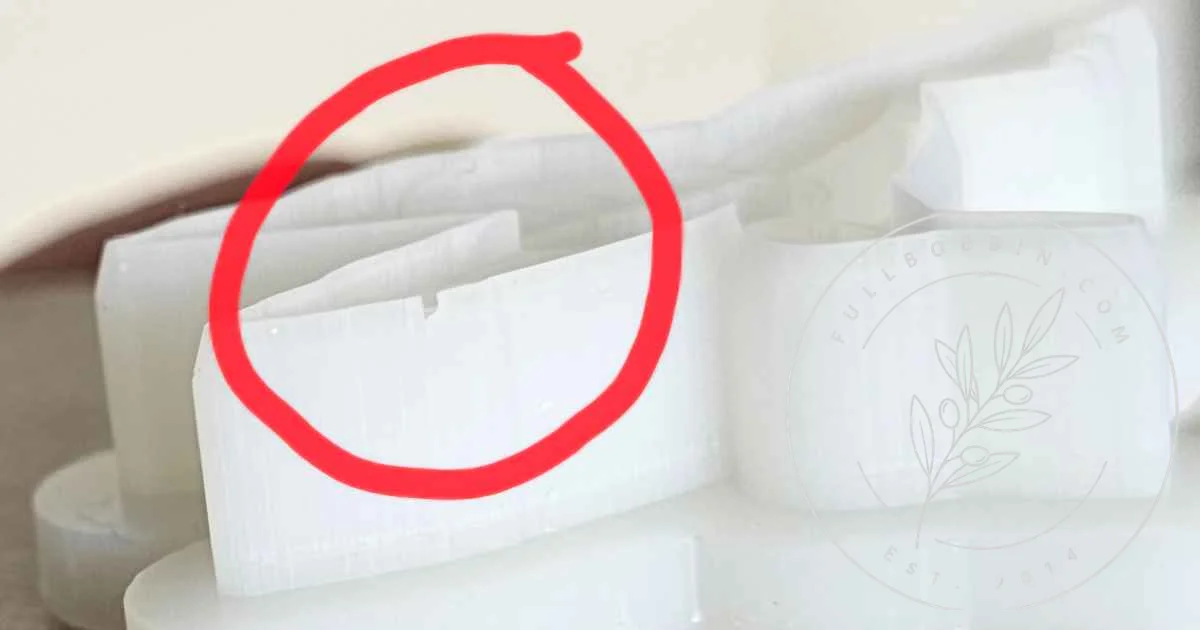
If you squeeze a thin resin cutter, it doesn’t flex. It shatters. Having razor-thin shards of cured resin explode all over your rolling mat is the quickest way to ruin a batch of clay (and your afternoon). And this same brittleness causes the edge of your cutters to nick and break over time. The image at the top of this post is a picture of one of my resin cutters a few months after I printed it. The blade has a sizable nick, rendering the cutter useless.
Repeat after me: Filament bends. Resin breaks.
2. The Execution Barrier
Let’s be honest about our workflows. My desk is already covered in clay scraps, baby wipes, acrylic rollers, color-mixed clay samples and too many connection cables.
Standard FDM printing is beautiful because you wait for the print to finish, pop it off the bed, and immediately start cutting clay.
Resin printing is a multi-step chemical process. You have to deal with toxic fumes, wear nitrile gloves, wash the prints in highly flammable isopropyl alcohol, and cure them in a UV station. If a tool requires a hazmat suit and 45 minutes of cleaning just to prototype a new earring shape, I am simply not going to do it.
And this is coming from a person who HAS a resin printer in addition to her beloved Bambu Lab A1 Mini. I actually think my Elegoo Mars 3 does a great job with resin prints. As a matter of fact, I got the resin printer first. Because I wanted to print teeny tiny fairies in 1:12 scale. Not 1:12 people scale. 1:12 fairy scale. That means my fairies are less than an inch tall (actually, they’re about 22mm – that’s tiny!). And they’re full body, anatomically correct fairies. For that level of detail, nothing beats resin. But I don’t use my fairies to cut clay. I use them to add to book nooks and ornamental gifts. They just have to look good. They don’t have to perform.
Plus, let’s not forget to mention that for safety reasons my resin printer is in the garage. Resin is toxic and gives off toxic fumes. I’m not heading out to the garage at midnight if inspiration strikes. My filament printer is in the utility room upstairs in between the bedrooms. And it’s so quiet I can leave it printing, leave both doors open and not hear a thing when I’m back in bed.
To sum it up: Resin looks good. Filament performs.
3. The Layer Line Myth
The only real argument for resin cutters is that they don’t leave visible layer lines on the sides of the cutters. My fairies are smooth and line-free. =)
But here’s the secret: If your FDM cutter is engineered with the correct blade taper, layer lines don’t matter. The way the cutter performs leaves nothing but a sharp cut in your clay.
A well-designed filament cutter pushes cleanly through the clay, leaving a perfectly smooth edge behind. You don’t need toxic goo to get a professional finish; you just need a better digital file.
My upcoming 3MF files are designed specifically to take advantage of the flexibility and strength of standard filament. I want you to be able to print them, peel them off the bed, and get right to the fun part. I’ve been working for months on them. I can’t wait to unveil them.
Save the resin for the D&D miniatures. We need tools that bounce if they fall on the floor.
Leave a Reply